Did you know that nearly 70% of Amazon shoppers never scroll past the first page of search results? In today’s hyper-competitive marketplace, having a great product simply isn’t enough anymore. Your Amazon listing serves as your digital storefront, sales representative, and brand ambassador all rolled into one. Consequently, the difference between a mediocre listing and an exceptional one can translate into thousands of dollars in monthly revenue.
Throughout this comprehensive guide, you’ll discover proven strategies to transform your Amazon listing from overlooked to outstanding. We’ll explore everything from professional product photography and keyword optimization to advanced A+ Content strategies. These tactics separate top sellers from the rest. Moreover, you’ll learn when and why investing in professional services can accelerate your success exponentially. By the end, you’ll have a complete roadmap to take your Amazon listing to the next level and dominate your niche.
Table Of Contents
- Understanding the Anatomy of a High-Performing Amazon Listing
- Mastering Product Images: Your First Line of Defense
- Crafting Click-Worthy, Keyword-Rich Titles
- Writing Bullet Points That Convert Browsers into Buyers
- Leveraging A+ Content for Brand Storytelling
- Backend Optimization: The Hidden Power of Your Amazon Listing
- Product Videos: The Game-Changing Asset
- Social Proof: Reviews, Ratings, and Customer Trust
- When to Invest in Professional Amazon Listing Services
- Taking Action: Your Path to Amazon Success
- Frequently Asked Questions
Understanding the Anatomy of a High-Performing Amazon Listing

Before diving into specific optimization tactics, it’s essential to understand what makes an Amazon listing truly successful. Every high-performing listing consists of five critical components that work together synergistically. These include your product title, images, bullet points, product description, and A+ Content. Each element serves a distinct purpose in guiding customers through their buying journey, from initial discovery to final purchase decision.
Amazon’s A9 algorithm evaluates your listing based on relevance and performance metrics. Relevance involves how well your keywords match customer searches. Performance encompasses click-through rates, conversion rates, and customer satisfaction scores. Therefore, optimization isn’t just about stuffing keywords everywhere. Instead, it’s about creating a compelling, informative experience that converts browsers into buyers.
The Psychology of First Impressions
First impressions matter immensely on Amazon. Customers typically decide within seconds whether to explore your listing further or move on to a competitor. Customer psychology plays a crucial role here. Shoppers instinctively scan for visual cues, trust signals, and quick answers to their pressing questions. Your listing must immediately communicate value, quality, and relevance to capture and maintain attention.
When all elements of your Amazon listing work together cohesively, they create a persuasive narrative. This narrative addresses customer needs, overcomes objections, and builds confidence in your product. This holistic approach transforms your listing from a simple product page into a powerful conversion machine that drives consistent sales growth.
Mastering Product Images: Your First Line of Defense
Your Amazon listing lives or dies by its visual appeal. This makes product images the single most critical element of your entire listing strategy. Research consistently shows that high-quality images can increase conversion rates by 30-40% compared to amateur photography. Amazon allows up to nine images, and successful sellers leverage every single slot to tell their product’s story comprehensively. Furthermore, since customers can’t physically touch or examine your product, your images must work overtime to bridge that sensory gap.
Main Product Image Requirements
Your main product image must meet Amazon’s strict technical requirements. You need a pure white background (RGB 255, 255, 255) and minimum 1000 pixels on the longest side. The product should occupy at least 85% of the frame. Beyond these basics, however, your hero image should showcase your product in perfect lighting with crisp detail and accurate colors. Additionally, demonstrating scale effectively helps customers understand exactly what they’re purchasing. Including props like hands holding the product or familiar reference objects eliminates size-related confusion that leads to returns.
Lifestyle and Infographic Images
Lifestyle images create powerful emotional connections. They show your product in real-world scenarios that customers can envision themselves experiencing. Instead of merely displaying what your product looks like, lifestyle photography demonstrates how it enhances daily life. It shows how your product solves problems or delivers aspirational experiences. For example, a yoga mat shown in a serene home studio setting resonates far more deeply than the same mat photographed on a white background.
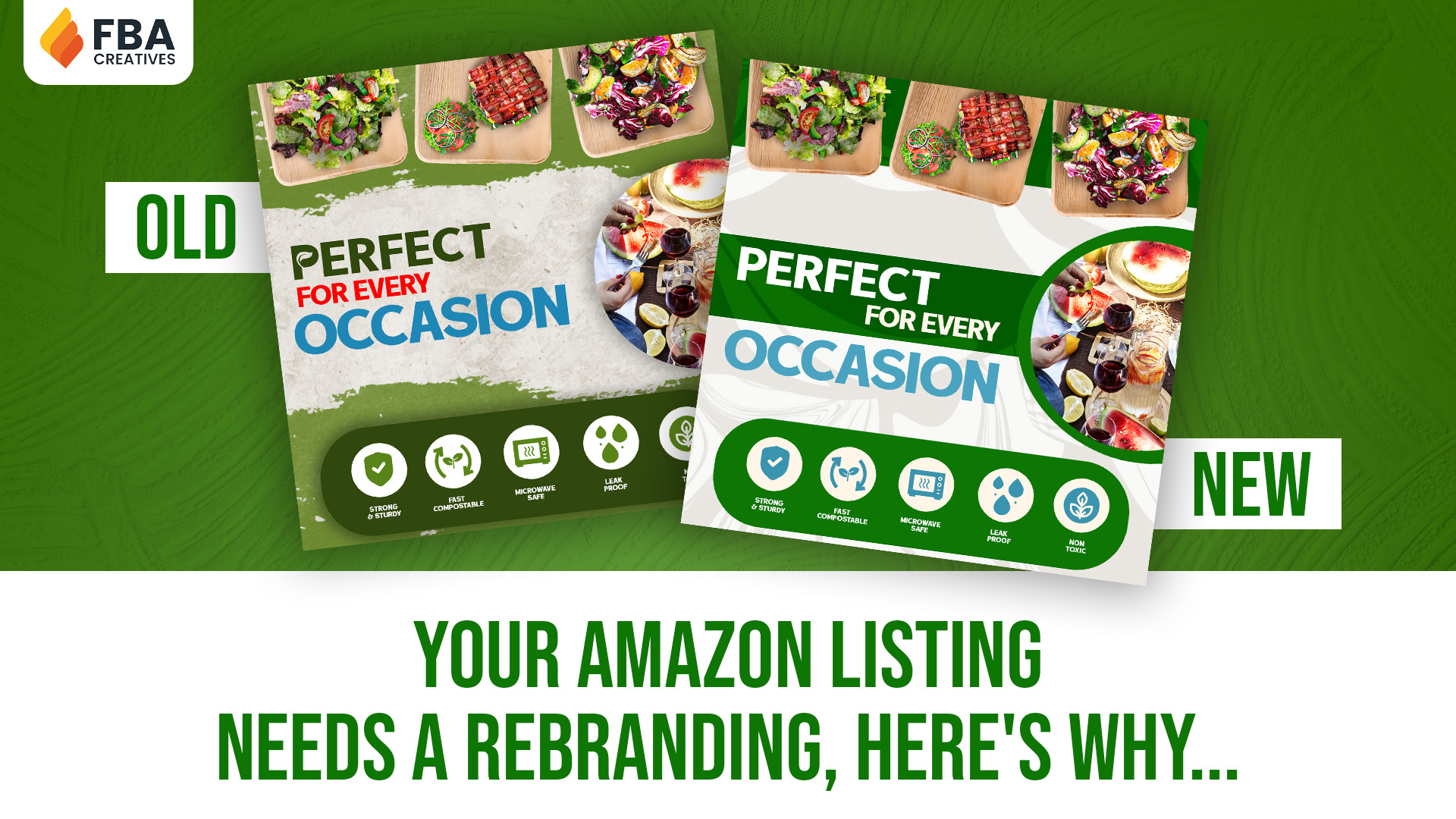
Infographic images serve as visual bullet points. They highlight key features, dimensions, materials, and benefits in an easily digestible format. Meanwhile, 3D renders and 360-degree images allow customers to examine your product from every angle. This dramatically increases buyer confidence and reduces return rates. When customers can rotate, zoom, and scrutinize products virtually, they feel more informed and secure in their purchasing decision.
Crafting Click-Worthy, Keyword-Rich Titles

Your product title represents the first text customers see in search results. This makes it absolutely crucial for Amazon listing optimization success. Amazon allows up to 200 characters for most categories. However, best practices suggest keeping titles between 150-180 characters for optimal readability. The key lies in front-loading your most important keywords while maintaining natural readability. Remember, you’re writing for humans first and algorithms second.
The Proven Title Formula
An effective Amazon listing title follows a proven formula. Start with your Brand Name, then add Key Feature, Product Type, and Important Attributes. These attributes include size, quantity, color, and material. For instance, rather than a vague title like “Yoga Mat,” an optimized version reads differently. It becomes “Premium Yoga Mat – Extra Thick 6mm – Non-Slip Textured Surface – Eco-Friendly TPE Material – 72″ Long Fitness Exercise Mat with Carrying Strap.” This structure immediately communicates brand positioning, key differentiators, and relevant search terms.
Avoiding Common Title Mistakes
Keyword stuffing remains one of the most common mistakes sellers make when attempting Amazon listing optimization. Titles crammed with repetitive keywords like “mat yoga mat exercise mat fitness mat” violate Amazon’s guidelines. They also create a poor user experience. Instead, focus on including diverse, relevant keywords naturally within your character limit. Additionally, avoid using promotional language like “best seller” or “top rated” in your title. Amazon prohibits these terms and may suppress your listing.
Balancing SEO requirements with readability ensures your title performs well both in search rankings and in converting clicks to sales. Therefore, test your title by reading it aloud. If it sounds awkward or robotic, customers will perceive your product as lower quality regardless of reality. Ultimately, your title should answer the customer’s immediate questions. What is this product? What makes it special? Why should I click on this instead of the dozens of other options?
Writing Bullet Points That Convert Browsers into Buyers
The Psychology of Scannable Content
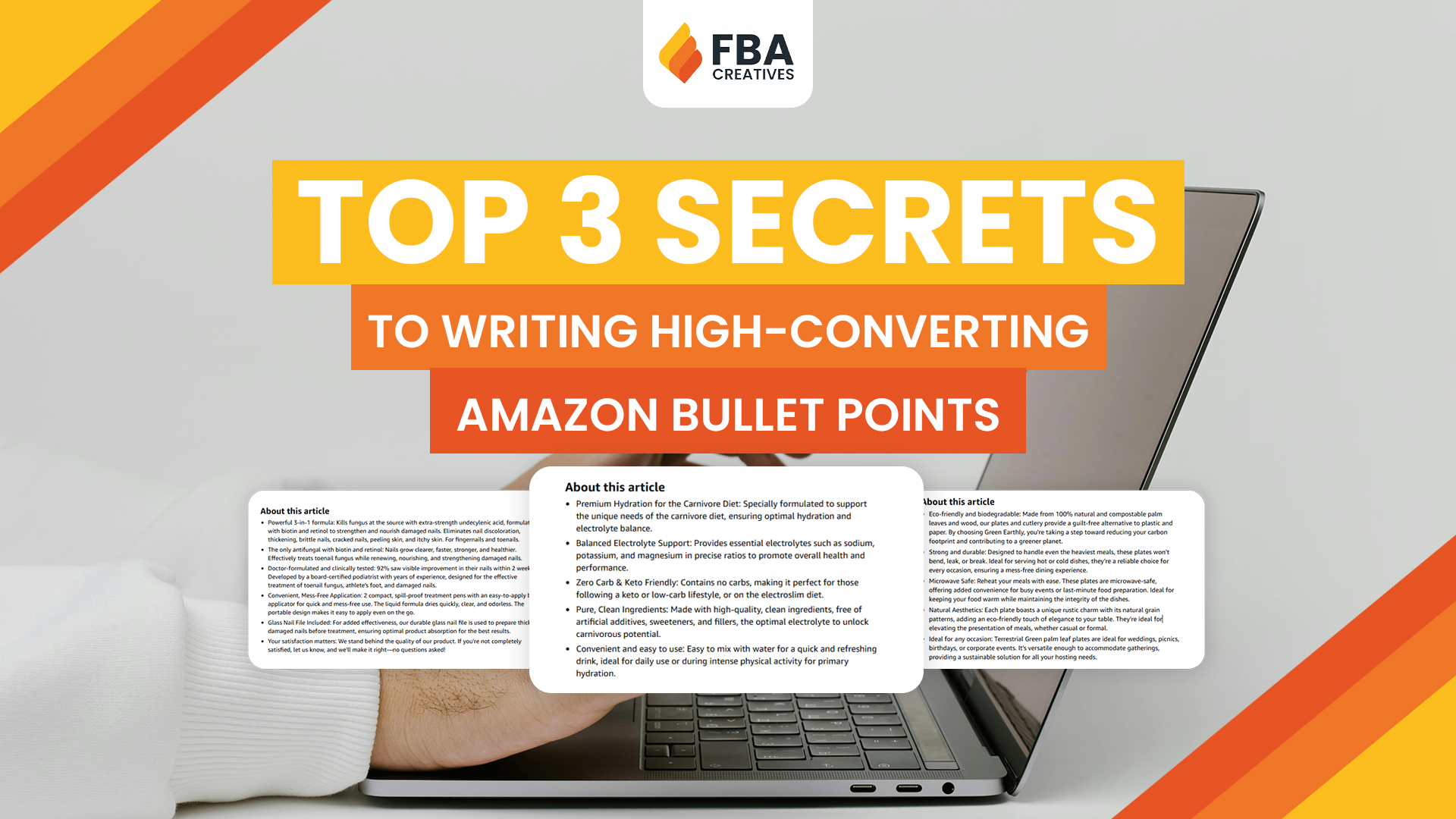
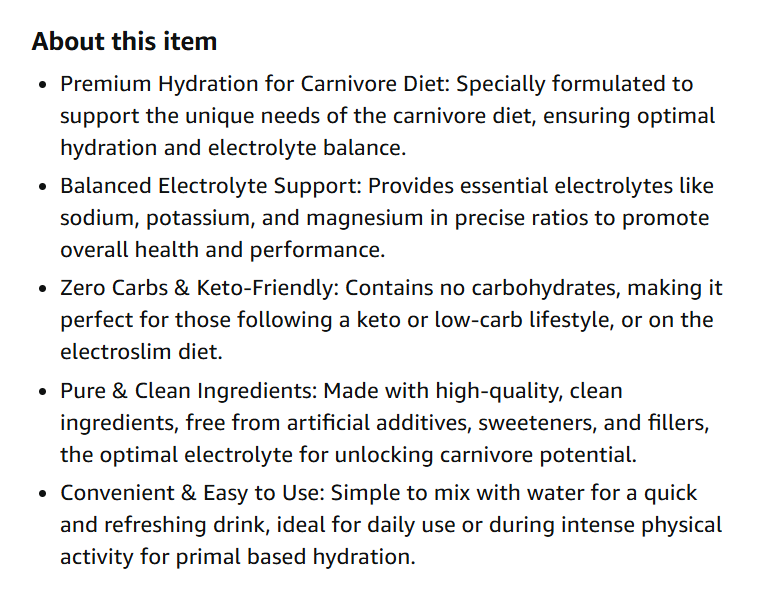
Once customers click through to your Amazon listing, your bullet points become the make-or-break element. They determine whether customers add to cart or bounce to a competitor. Successful bullet points leverage the psychology of scannable content. Most customers won’t read every word, so strategic formatting and front-loading benefits ensure your key messages land effectively. Each of your five bullet points serves as a mini-sales pitch addressing different customer priorities and potential objections.
Benefits Over Features
The golden rule of compelling bullet points is leading with benefits rather than merely listing features. Customers don’t buy a “1500-watt motor.” They buy the ability to blend frozen fruit effortlessly for perfect smoothies every morning. Consequently, effective bullet points transform technical specifications into tangible lifestyle improvements. For example, instead of “Made with antimicrobial material,” write something more compelling. Try “Stays Fresh and Odor-Free: Antimicrobial material naturally prevents bacteria buildup, ensuring your mat smells clean even after intense hot yoga sessions.”
Strategic Keyword Integration
Strategically incorporating secondary keywords throughout your bullet points strengthens your Amazon listing optimization. This works without compromising readability. Unlike your title, bullet points offer more space to include long-tail keywords and natural variations that customers actually search for. Moreover, addressing specific pain points directly demonstrates that you understand your customer’s needs. These needs might include ease of cleaning, durability concerns, compatibility questions, or value for money.
Formatting for Mobile Users
While Amazon doesn’t allow traditional formatting like bold or italics in bullet points, you can create visual hierarchy through strategic capitalization and punctuation. Starting each bullet with a capitalized benefit statement followed by a colon helps readers quickly scan for relevant information. Additionally, keeping bullets concise yet informative proves essential. Typically aim for 150-200 characters each. This ensures mobile users can digest your content easily. Remember, nearly 70% of Amazon traffic now comes from mobile devices, making mobile-friendly formatting absolutely essential.
Leveraging A+ Content for Brand Storytelling

A+ Content represents one of the most powerful yet underutilized tools available for taking your Amazon listing to the next level. Formerly known as Enhanced Brand Content, this feature allows registered brand owners to replace the standard product description. You can use rich, visually enhanced content featuring custom images, comparison charts, and engaging layouts. Research demonstrates that quality A+ Content increases conversion rates by an average of 3-10%. Some products experience even more dramatic improvements.
Available Modules and Best Practices
Amazon provides numerous A+ Content modules that enable you to showcase your brand story effectively. You can demonstrate product benefits visually, compare products within your catalog, and address customer questions comprehensively. The most effective A+ Content combines lifestyle imagery with detailed feature explanations. It includes trust-building elements like certifications or guarantees. It also uses clear visual hierarchy that guides customers through your narrative. Furthermore, A+ Content proves especially valuable for complex products that require more explanation or differentiation from similar offerings.
Building Brand Connections
Brand storytelling through A+ Content transforms your Amazon listing from a transactional product page into an immersive brand experience. Instead of simply listing what your product does, compelling A+ Content explains your brand’s mission, values, and commitment to quality. This creates emotional connections that foster customer loyalty. For instance, a sustainable product brand might showcase their eco-friendly manufacturing process. They might highlight material sourcing and environmental impact, thereby resonating deeply with conscious consumers.
Mobile optimization remains critical since most customers view your A+ Content on smartphones. Consequently, prioritize vertical layouts, larger text, and images that communicate clearly even on small screens. Additionally, professional design elevates perceived product value. Poorly designed A+ Content actually damages credibility more than having no enhanced content at all. This represents exactly why many successful sellers partner with specialized agencies to ensure their A+ Content reflects the premium quality of their products and brand.
Backend Optimization: The Hidden Power of Your Amazon Listing

While customers never see your backend search terms, these hidden keywords dramatically impact where and how often your Amazon listing appears in search results. Amazon provides 250 bytes of backend keyword space that should be utilized completely and strategically. Unlike visible listing content, backend keywords allow you to include common misspellings. You can add alternative names, abbreviations, and synonyms that might not fit naturally in your title or bullets.
Keyword Research Fundamentals
Effective keyword research forms the foundation of backend optimization success. Tools like Helium 10, Jungle Scout, or Amazon’s own Brand Analytics reveal exactly what terms customers search for. They show the exact phrases customers use when looking for products like yours. Moreover, analyzing competitor listings helps identify keyword gaps you can exploit. However, avoid simply copying competitors. Instead, focus on finding unique, high-volume search terms where competition remains lower. This gives your product better visibility opportunities.
Avoiding Common Mistakes
Common backend keyword mistakes include repeating words already used in your title or bullets. Other errors include using punctuation or special characters, including competitor brand names, or adding ASINs. Amazon’s algorithm automatically ignores these violations, effectively wasting your limited character space. Instead, focus on single words or short phrases separated by spaces. No commas are necessary. Additionally, include plural and singular variations since Amazon doesn’t automatically recognize both forms for every term.
Category and browse node optimization represents another crucial backend element often overlooked by sellers. Choosing the most specific, accurate category for your product ensures you appear in relevant searches. It also helps you compete against appropriate alternatives. Furthermore, correct product attributes help Amazon match your listing to filtered searches. These attributes include size, color, material, and target audience. They dramatically expand your visibility. Therefore, take time to complete every applicable attribute field thoroughly rather than leaving them blank.
Product Videos: The Game-Changing Asset
Product videos have emerged as one of the most powerful conversion tools available for your Amazon listing. Statistics show video can increase sales by up to 80% compared to listings without video content. Videos allow customers to see products in action. They help customers understand scale and functionality and gain confidence in their purchase decision, all within 30-90 seconds. Moreover, video content keeps customers engaged on your listing longer. This signals quality to Amazon’s algorithm and can improve your organic search rankings.
Types of Effective Product Videos
The most effective Amazon product videos include demonstration videos showing your product being used in real-world scenarios. Lifestyle videos create emotional connections through aspirational settings. Comparison videos highlight advantages over alternatives. Technical requirements specify that videos should be at least 1280×720 pixels. They should be between 6 seconds and 10 minutes long, though 30-90 seconds performs best. Format them as MOV, MP4, or FLV files. Additionally, your main product video should clearly showcase your product within the first 5 seconds to capture attention immediately.
Demonstration Videos That Sell
Demonstration videos prove particularly valuable for products with multiple features, assembly requirements, or non-obvious uses. Showing rather than telling dramatically reduces customer confusion and pre-sale questions. For example, a complex coffee maker benefits immensely from a quick video. The video demonstrates the grinding, brewing, and frothing process. It answers questions no amount of text could address as effectively. Consequently, products with demonstration videos typically experience significantly lower return rates since customers know exactly what they’re getting.
Beyond conversion benefits, videos enhance your overall brand perception and credibility. Professional video production signals to customers that you’re an established, trustworthy brand. It shows you’re willing to invest in their shopping experience. Even simple, authentic videos shot with good lighting and clear audio outperform having no video content whatsoever. Therefore, if professional video production isn’t currently in your budget, start with a basic demonstration video. Even a video shot on a smartphone proves infinitely better than skipping this crucial element entirely.
Social Proof: Reviews, Ratings, and Customer Trust
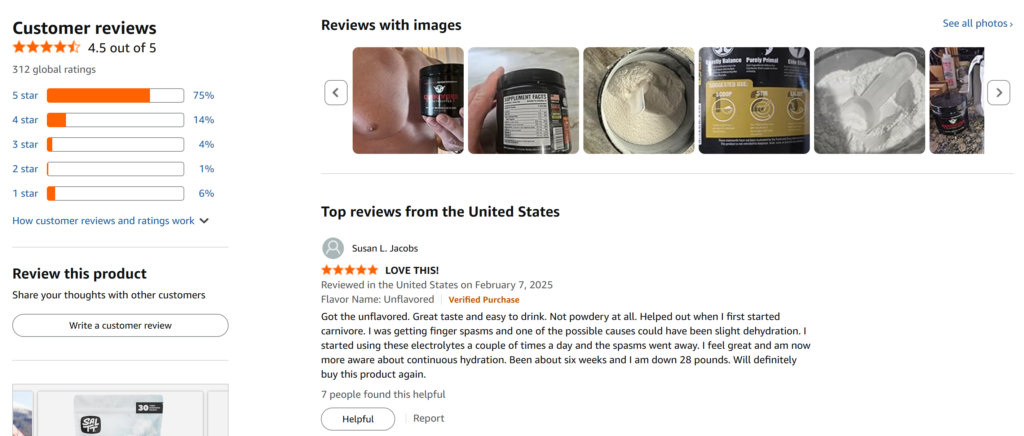
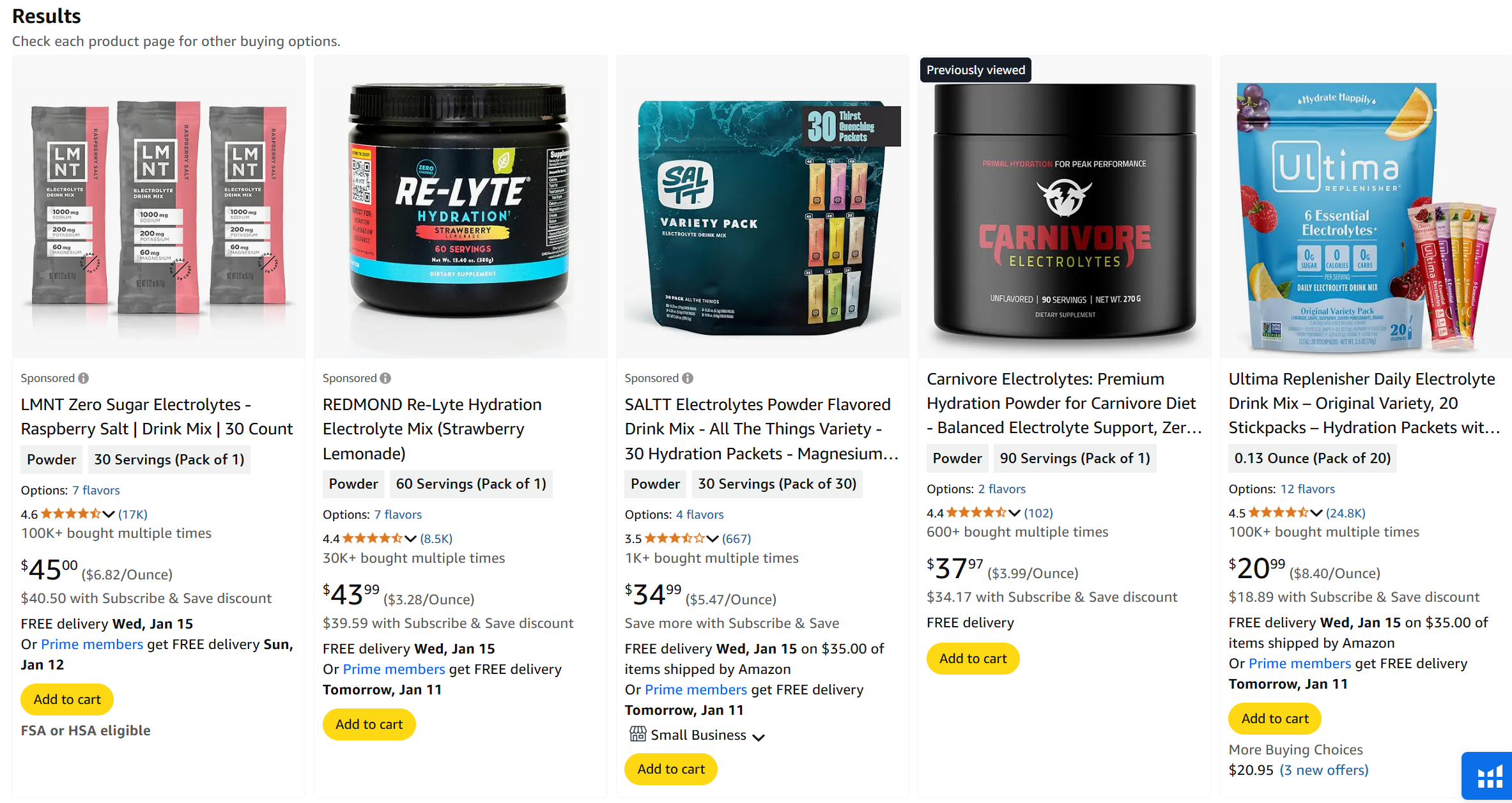
Reviews and ratings represent perhaps the most influential factor in customer purchase decisions. In fact, 95% of shoppers read reviews before making a purchase. Your Amazon listing’s star rating and review count appear prominently in search results. They directly impact click-through rates. Products with 4.5+ stars and numerous reviews simply convert better than those with fewer or lower-rated reviews. Furthermore, Amazon’s algorithm favors well-reviewed products. This creates a virtuous cycle where good reviews lead to better visibility, which generates more sales and additional reviews.
Generating Reviews Ethically
Generating reviews ethically requires strategic effort within Amazon’s strict guidelines. The Amazon Vine program allows you to provide free products to trusted reviewers in exchange for honest reviews. This jumpstarts social proof for new products. Additionally, the “Request a Review” button in Seller Central enables you to solicit feedback without violating Amazon’s Terms of Service. Following up with customers through Amazon’s messaging system also proves effective. Just be careful to request feedback generally rather than asking specifically for positive reviews.
Handling Negative Feedback
Responding to negative reviews professionally demonstrates your commitment to customer satisfaction. It can actually enhance your brand reputation. When potential customers see thoughtful, solution-oriented responses to criticism, they gain confidence. They know you’ll support them if issues arise. Acknowledge the customer’s frustration, offer to make things right, and provide contact information for further assistance. Moreover, patterns in negative reviews often reveal legitimate product or listing issues you should address. Treating criticism as valuable feedback ultimately improves your product and Amazon listing quality.
The Q&A section represents another underutilized social proof opportunity for your Amazon listing. Proactively answering common questions yourself establishes expertise and ensures accurate information appears prominently. Encourage satisfied customers to contribute answers, creating community engagement that builds trust. Additionally, monitor this section regularly for new questions. Quick, helpful responses demonstrate active customer care. They also provide another opportunity to address concerns that might otherwise prevent purchases.
When to Invest in Professional Amazon Listing Services
Understanding when to invest in professional Amazon listing services represents a critical decision. It can dramatically accelerate your success. While DIY optimization works for some sellers, partnering with experts delivers measurable ROI. You gain time savings, higher conversion rates, and avoid costly mistakes. Professional agencies bring specialized expertise and current knowledge of Amazon’s evolving guidelines. They also offer proven strategies refined across thousands of successful listings. Consequently, what might take you weeks to learn and implement, professionals accomplish in days with superior results.
Calculating the Revenue Impact
The return on investment from professional design services becomes evident quickly when you calculate the revenue impact of improved conversion rates. For example, if your product currently converts at 10% and professional optimization increases that to 15%, you’ve just boosted sales by 50% with the same traffic. On a product generating $10,000 monthly, that represents an additional $5,000 in revenue. This far exceeds the one-time investment in professional services. Moreover, high-quality visuals and optimized content continue driving sales indefinitely. This makes the investment highly cost-effective over time.
What to Look For in an Agency
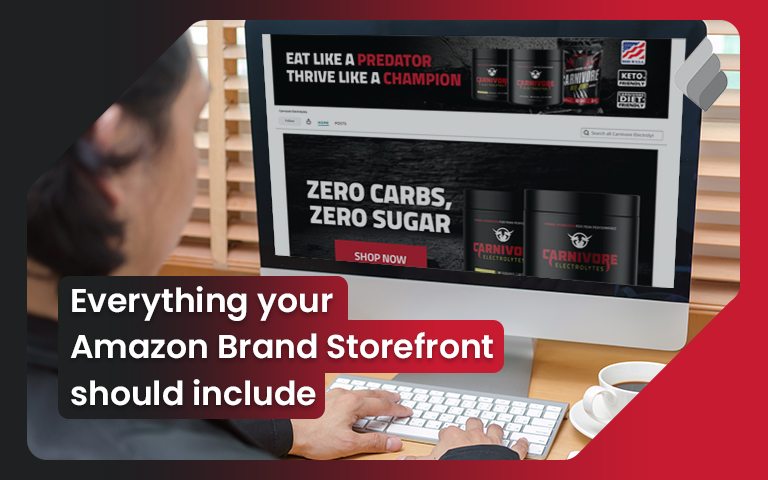
When evaluating Amazon listing agencies, look for comprehensive service offerings. These should address all aspects of your listing needs rather than piecemeal solutions. The best partners provide everything from custom product photography and 3D renders to A+ Content design. They also offer brand storefront creation and engaging product videos in multiple formats. Additionally, confirm they understand Amazon’s guidelines thoroughly and stay current with policy changes. Violations can result in suppressed listings or account suspensions, making compliance expertise invaluable.
Why FBA Creatives Stands Out
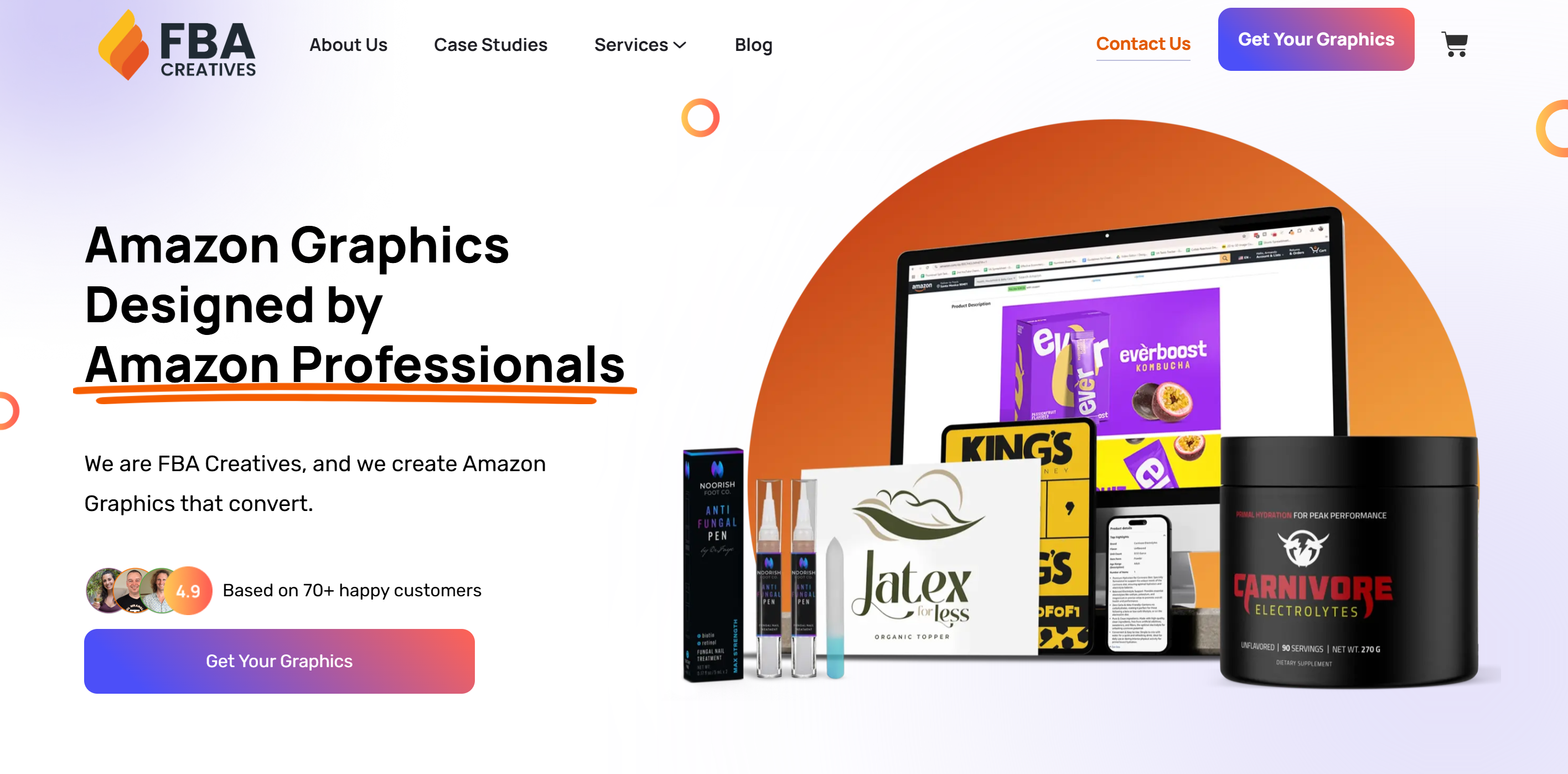
FBA Creatives exemplifies the full-service approach that serious sellers need to dominate their niche. They specialize in creating high-converting, visually compelling branding and listing content. Everything is tailored specifically to your product, niche, and target audience. Their comprehensive services include custom product images, professional 3D renders, and strategic A+ Content. They also provide complete Amazon Brand Storefront design, packaging design, and engaging product videos. These videos come in lifestyle, infographic, and 360-degree formats.
What truly sets them apart is their commitment to competitive pricing without sacrificing quality. Their designs remain more premium, polished, and performance-focused than alternatives on the market. With a 7-business-day turnaround for first drafts, unlimited revisions until you’re completely satisfied, and a no-questions-asked money-back guarantee, the risk is minimal. They also offer 24/7 email support. FBA Creatives makes professional Amazon listing optimization risk-free, efficient, and results-driven. Investing in expert services isn’t an expense. It’s a strategic decision that pays dividends through increased visibility, higher conversion rates, and sustainable competitive advantage.
Taking Action: Your Path to Amazon Success

The Ongoing Nature of Optimization
Taking your Amazon listing to the next level requires understanding that optimization isn’t a one-time project. Rather, it’s an ongoing process of testing, refinement, and adaptation. Every element we’ve discussed works synergistically to create a powerful conversion engine. These elements include professional product images, keyword-rich titles, compelling A+ Content, and strategic video integration. Moreover, the competitive landscape on Amazon continually evolves. This means sellers who commit to continuous improvement consistently outperform those who set up their listings once and forget about them.
Conducting Your Listing Audit
Start by conducting an honest audit of your current Amazon listing against the standards outlined throughout this guide. Identify your weakest areas. Perhaps your product images look dated compared to competitors. Or maybe your bullet points focus too heavily on features rather than benefits. Prioritize improvements based on potential impact, typically starting with visual elements since they influence conversion rates most dramatically. Additionally, implement changes systematically so you can measure their individual impact on your sales performance.
Building Competitive Advantage
The competitive advantage of a meticulously optimized Amazon listing cannot be overstated in today’s marketplace. While your competitors settle for mediocre listings cobbled together with smartphone photos and keyword-stuffed titles, you have an opportunity. You can stand out through professional presentation and strategic optimization. Customers instinctively gravitate toward listings that demonstrate quality, professionalism, and attention to detail. These visual and textual cues signal product quality even before purchase.
Whether you choose to tackle optimization independently or partner with professional services like FBA Creatives, the crucial factor is taking action today. Don’t postpone improvements indefinitely. Every day your listing remains suboptimal represents lost revenue and market share gifted to better-optimized competitors. Your product deserves to be seen, understood, and chosen by customers. Your Amazon listing serves as the vehicle that makes this happen. Start implementing these strategies now and watch your sales, rankings, and brand presence transform dramatically.
Frequently Asked Questions
How long does it take to see results from Amazon listing optimization?
Results from Amazon listing optimization typically appear within 2-4 weeks, though some improvements manifest almost immediately. Visual upgrades like professional product images often boost conversion rates within days as new visitors respond to enhanced presentation. Meanwhile, backend keyword optimization and title changes may take 1-2 weeks to fully impact your search rankings. This happens as Amazon’s algorithm reindexes your listing. Consistently, the most dramatic long-term improvements occur over 4-8 weeks. Increased conversion rates signal quality to Amazon’s algorithm, triggering better organic placement. This creates a positive feedback loop of visibility and sales.
Can I optimize my Amazon listing myself or should I hire professionals?
You can certainly optimize your Amazon listing yourself if you have time to learn best practices. You’ll also need access to quality photography equipment or skills, and patience for trial and error. DIY optimization works well for sellers with limited budgets, simple products, or those who enjoy learning new skills. However, professional services deliver superior results faster, particularly for competitive niches where presentation quality directly impacts sales. Professionals bring specialized expertise, proven templates, high-end equipment, and current knowledge of Amazon’s evolving requirements. These advantages translate into measurably higher conversion rates and ROI that typically far exceeds the service investment.
How many keywords should I target in my Amazon listing?
Your Amazon listing should target one primary keyword (your main focus keyphrase) and 10-20 secondary keywords. Distribute these naturally throughout your title, bullets, description, and backend search terms. Focus on quality over quantity. Accurately targeting highly relevant keywords that customers actually search generates far better results than stuffing dozens of marginally related terms. Your primary keyword should appear in your title and at least 2-3 bullet points. It should also appear in your description and backend terms. Secondary keywords fill out the remaining space, including long-tail variations and customer search phrases revealed through keyword research tools.
What’s the most important element of an Amazon listing?
While every element contributes to overall success, product images represent the single most important component of your Amazon listing. They influence both click-through rates in search results and conversion rates on your product page. Customers make rapid judgments about product quality based primarily on visual presentation. High-quality images can overcome mediocre copy, but exceptional copy rarely compensates for poor images. That said, the most successful listings excel across all elements simultaneously. They create a cohesive, professional presentation that builds trust, communicates value, and motivates purchases. Therefore, rather than optimizing elements in isolation, approach your listing holistically for maximum impact.
How often should I update my Amazon listing?
You should review and potentially update your Amazon listing quarterly at minimum. Major revisions work best annually or whenever you notice declining performance metrics. Seasonal adjustments prove beneficial for products with varying use cases throughout the year. For example, highlight cold-weather benefits in winter and breathability in summer. Additionally, update your listing immediately when Amazon changes policies. Also update when competitors introduce superior presentation, when you identify new high-volume keywords, or when customer reviews reveal confusion about features or benefits. However, avoid changing core elements like title and main image too frequently. This can temporarily disrupt your rankings while Amazon reindexes your updated listing.