

Amazon’s marketplace has transformed dramatically over the past few years. Visual content now plays a more critical role than ever before. In fact, your product images directly influence both your search rankings and conversion rates. Traditional product photography still works. However, Amazon 3D renders offer something unique. They provide complete control over lighting, angles, and presentation. Moreover, they cost less than traditional photography in the long run.
The Amazon algorithm evaluates your images carefully. It considers click-through rates, conversion performance, and customer engagement. Consequently, poorly optimized renders can tank your rankings. Meanwhile, strategic 3D renders boost visibility and sales simultaneously. What makes a 3D render “algorithm-friendly”? It’s more than just looking pretty. Your renders must meet technical specifications, highlight key features clearly, and encourage clicks while maintaining Amazon’s strict compliance standards.
This guide reveals exactly how to optimize your Amazon 3D render strategy. You’ll learn the technical requirements, design principles, and advanced tactics. Furthermore, you’ll discover why professional services like FBA Creatives deliver better ROI than DIY approaches. Let’s dive into the specifics.
Table Of Contents
- Understanding Amazon's A9/A10 Algorithm and Visual Content
- Amazon's Technical Requirements for 3D Renders
- Key Elements of an Algorithm-Optimized Amazon 3D Render
- Advanced Optimization Strategies
- Common Mistakes That Hurt Algorithm Performance
- The ROI of Professional Amazon 3D Renders
- Why Working with Experts Like FBA Creatives Makes Sense
- Taking Your Amazon Visual Strategy to the Next Level
- Frequently Asked Questions
Understanding Amazon’s A9/A10 Algorithm and Visual Content

Amazon’s search algorithm has evolved significantly with the A10 update. Notably, the current system weighs customer behavior more heavily than its predecessor. In this equation, your images play a crucial role. Specifically, the algorithm tracks your click-through rate (CTR) on search results carefully. High-quality Amazon 3D renders grab attention immediately and stand out among generic photos. Subsequently, those clicks signal relevance to Amazon. The algorithm then interprets this as quality content. As a result, your product ranks higher in search results. This creates a positive feedback loop that compounds over time.
Moreover, visual content affects more than just clicks, it impacts conversion rates directly. In fact, shoppers make split-second decisions based on images alone. Therefore, professional 3D renders showcase products better than amateur photography. Additionally, they highlight details that photography might miss. Furthermore, secondary images matter just as much as your main image. The algorithm considers your entire image stack holistically. A cohesive set of renders tells a complete story. Consequently, this keeps shoppers engaged longer. As a result, engagement metrics improve across the board.
How 3D Renders Boost Algorithm Performance:
- Increased Click-Through Rates: Professional renders attract more clicks in search results
- Higher Conversion Rates: Clear visuals help shoppers make confident purchase decisions
- Better Engagement Metrics: Quality image stacks keep visitors on your listing longer
- Improved Search Rankings: Positive customer behavior signals boost your visibility
- Enhanced Mobile Performance: Crisp, detailed renders display perfectly on small screens
In certain categories, 3D renders dramatically outperform traditional photography. Specifically, electronics, home goods, supplements, toys, and beauty products benefit particularly well from professional renders. Moreover, these products require multiple angles and detailed feature callouts that traditional photography struggles to deliver affordably. Ultimately, the versatility and precision of 3D rendering make it the ideal solution for these competitive niches.
Amazon’s Technical Requirements for 3D Renders
Amazon enforces strict technical standards for all product images. Consequently, understanding these requirements is absolutely essential. Non-compliant images get rejected immediately. Worse yet, they can trigger listing suspensions. First, your main image must meet specific criteria. The minimum resolution is 1000 pixels on the longest side. However, Amazon recommends 2000 pixels or higher. Notably, larger images enable the zoom function. This feature significantly boosts conversion rates. Additionally, file format matters too. Amazon accepts JPEG, PNG, GIF, and TIFF files. Generally, JPEG works best for most Amazon 3D render projects because it balances quality with file size efficiently.
Furthermore, main images must use pure white backgrounds (#FFFFFF or RGB 255,255,255). This rule is non-negotiable. Amazon’s system checks this automatically. Even slightly off-white backgrounds trigger rejections. Moreover, text and graphics face strict limitations on main images. You cannot include promotional text, watermarks, or borders. Words like “Sale” or “New” are prohibited. The product itself must be the sole focus. On the other hand, secondary images offer more flexibility for text callouts and infographics. However, keep text minimal and readable for mobile shoppers. Finally, different categories have additional specific requirements that you must research carefully.
Additional Compliance Considerations:
- Professional agencies ensure compliance from the start, eliminating costly delays
- PNG format works better when transparency is needed for editing
- The zoom function only activates with images 1000+ pixels
- Amazon’s automated systems flag violations instantly
- Beauty products require visible ingredient panels
- Apparel listings need front, back, and side angle views
Key Elements of an Algorithm-Optimized Amazon 3D Render

The 85% rule governs main image composition. Your product should fill approximately 85% of the frame. This maximizes visibility in search results. Thumbnails appear small on mobile devices. Therefore, larger product representation performs better.
Position your product strategically. Center it in the frame. Ensure all sides have equal spacing. This creates visual balance. Moreover, it looks professional and intentional.
Many sellers make critical cropping mistakes. They leave too much white space. Others crop too tightly, cutting off product edges. Both approaches hurt performance. Find the sweet spot that showcases your product fully.
Clarity and Detail
Amazon shoppers can’t touch your product physically. Your Amazon 3D render must compensate for this limitation. Showcase every important detail clearly. Use angles that reveal functionality and quality. Strategic camera angles make all the difference. Front views establish initial recognition. Three-quarter views show depth and dimension. Close-ups reveal texture and craftsmanship. Each angle serves a specific purpose.
Highlight your unique selling points visually. Does your product have a special coating? Show the texture. Does it include multiple components? Display them assembled and separated. Hence, visual storytelling eliminates questions before they arise. Texture and material representation require special attention. Then, matte finishes need different lighting than glossy surfaces. Metal should show appropriate reflections. Fabric must display weave patterns accurately. Realism builds trust with potential buyers.
Advanced Detail Optimization:
- Exploded views that show internal mechanisms or hidden features
- Macro photography-style renders revealing fine craftsmanship
- Cross-section cuts displaying internal construction quality
- Shadow and highlight adjustment based on surface properties
- Color accuracy matching to prevent return rates
Lifestyle and Contextual Renders
Studio renders work perfectly for main images. However, lifestyle contexts enhance secondary images significantly. They help shoppers visualize product usage. Additionally, they demonstrate scale and practical application. Create compliant lifestyle images carefully. The product must remain the primary focus. Background elements should support, not distract. Moreover, maintain quality and lighting consistency throughout.
Scale presents challenges in online shopping. A well-designed Amazon 3D render solves this problem elegantly. Show your product next to recognizable objects. Alternatively, include hands interacting with it. These visual cues communicate size instantly. Functionality demonstrations are powerful selling tools. Show your product in action. Illustrate the problem it solves. Lastly, demonstrate its ease of use. These contextual renders answer questions preemptively.
Creative Context Applications:
- Seasonal settings that align with current shopping trends
- Target demographic representation in lifestyle scenes
- Common pain point solutions visualized clearly
- Multiple use cases across different environments
- Emotional connection through relatable scenarios
Infographic Integration
Balancing information with visual appeal requires skill. Too much text overwhelms viewers. Too little leaves questions unanswered. Find the perfect middle ground. Text readability varies across devices. Mobile screens display images much smaller.
Callout best practices keep you compliant. Use short, benefit-focused phrases. Avoid promotional language like “Best” or “#1.” Stick to factual feature descriptions. Lastly, for example the “BPA-Free Material” works but “Best Bottle Ever” doesn’t.
Strategic Infographic Design:
- Icon-based callouts that transcend language barriers
- Directional arrows guiding the eye to important features
- Color-coded systems for organizing multiple benefits
- Whitespace balance preventing visual clutter
- Hierarchy emphasis placing critical information first
Advanced Optimization Strategies

Color psychology influences purchasing decisions subconsciously. While main images require white backgrounds, secondary images offer flexibility. Choose background colors that complement your product. Contrast helps your product pop visually.
A/B testing different render styles yields valuable insights. Test various angles, lighting setups, and compositions. Amazon’s Brand Analytics provides performance data. Alternatively, use external tools to track conversions. Let data guide your decisions.
Seasonal variations keep your listing fresh. Create holiday-themed secondary images. Update lifestyle contexts for different seasons. This strategy signals active management to the algorithm. Furthermore, it resonates with shoppers’ current mindset.
Your image stack should tell a cohesive story:
- Image 1 – shows the product clearly
- Image 2 – demonstrates scale or usage
- Image 3 – highlights key features
- Image 4 – shows variations or contents
This sequence guides shoppers naturally toward purchase.
Mobile-first design is non-negotiable today. Over 70% of Amazon shopping happens on mobile devices. Design your Amazon 3D render for small screens first. Then verify it looks good on desktop. This approach ensures maximum effectiveness.
Common Mistakes That Hurt Algorithm Performance

Overcrowded compositions confuse shoppers. Some sellers try to show everything in one image. This creates visual chaos. Instead, use your image slots strategically. Each image should have one clear purpose.
Poor lighting ruins otherwise good renders. Harsh shadows hide important details. Overexposure washes out textures. Inconsistent lighting across images looks unprofessional. Professional 3D artists understand lighting intuitively. They create renders that look naturally lit.
Text-heavy images reduce click-through rates. Shoppers scan search results quickly. Dense text blocks slow them down. Moreover, small text becomes unreadable on mobile. Keep text minimal and impactful.
Generic stock-looking renders fail to differentiate your brand. They blend into the competition. Custom branded assets stand out immediately. They communicate professionalism and attention to quality. This distinction matters significantly in crowded categories.
Inconsistent styling across image slots damages brand perception. Different lighting, backgrounds, or quality levels look amateurish. Maintain visual consistency throughout your listing. This coherence builds trust subconsciously.
The ROI of Professional Amazon 3D Renders

Poor product images create a cascading chain of problems that drain profitability. Low engagement metrics from amateur renders decrease organic rankings. Your visibility suffers while advertising costs increase to compensate for weak performance. Decreased conversion rates directly reduce revenue and profit margins. Meanwhile, inaccurate representation increases return rates and associated processing costs. Higher advertising spending compensates for weak organic performance temporarily. However, poor fundamentals prevent long-term sustainable growth and profitability.
Professional renders create the opposite effect, a positive performance cycle across all metrics. Better engagement improves organic search rankings consistently. Higher click-through rates bring more qualified traffic. Increased conversion rates maximize revenue from existing traffic sources. Reduced returns improve account health and customer satisfaction scores. Better advertising performance lowers acquisition costs per conversion significantly. Quality imagery delivers compounding returns across all traffic channels simultaneously.
Cost-Benefit Analysis:
- DIY Challenges: Requires technical modeling skills, continuous guideline learning, and marketing psychology expertise, delaying market entry significantly
- Organic Ranking Impact: Professional renders improve search visibility, reducing dependency on expensive PPC campaigns
- Conversion Rate Gains: Quality visuals can increase conversions by 20-40%, paying for themselves within weeks
- Return Rate Reduction: Accurate representation decreases returns by 15-30%, improving account health and reducing processing costs
- Time Savings: Agencies deliver proven results faster through established workflows and platform expertise
- Advertising Efficiency: Better creative assets lower cost-per-click and improve ad conversion rates simultaneously
Why Working with Experts Like FBA Creatives Makes Sense
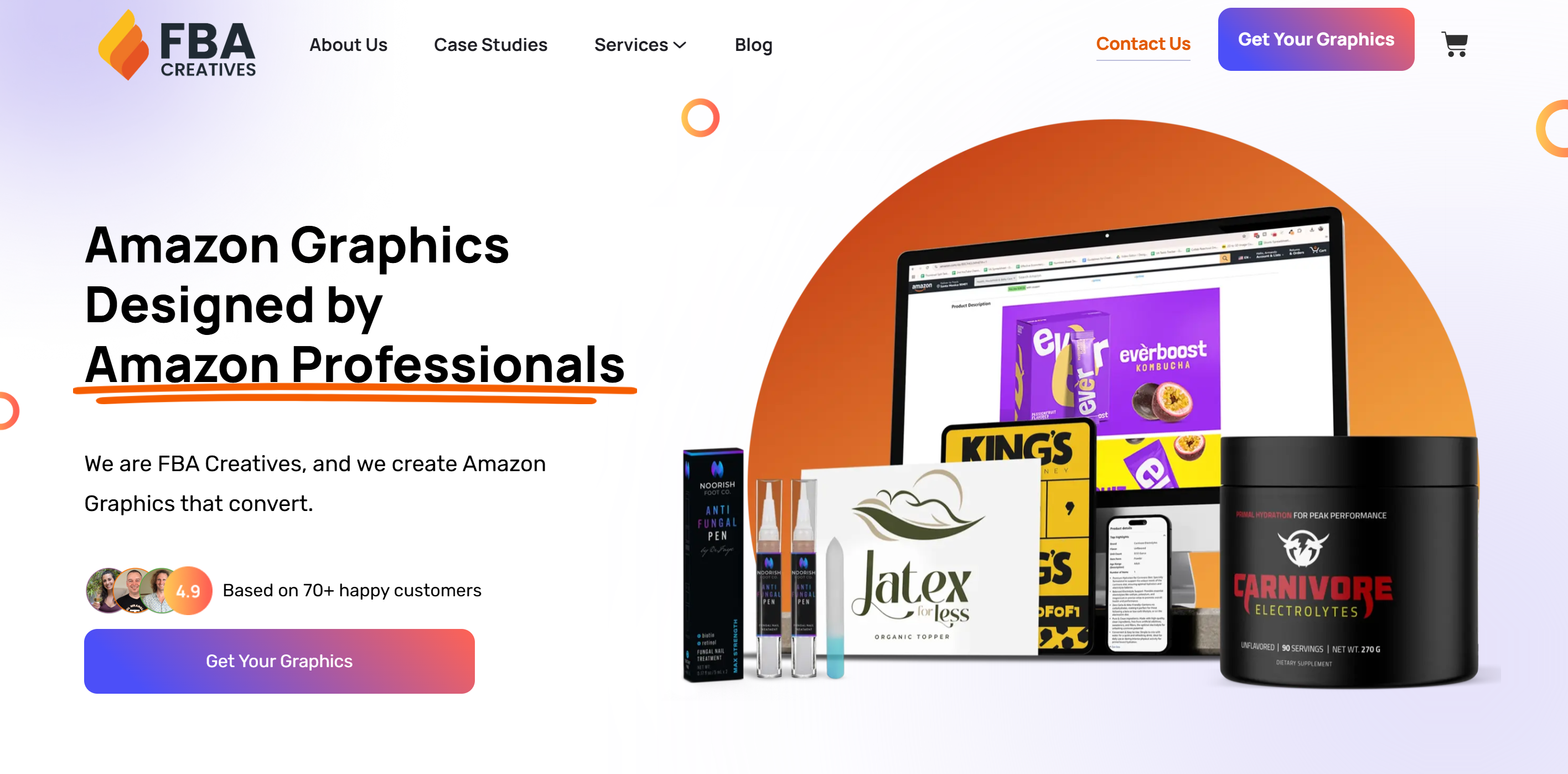
Specialized Amazon design agencies understand the platform intimately. They stay current with algorithm changes and policy updates. This knowledge protects your investment and ensures your renders remain compliant and effective. Generic design services often miss Amazon-specific requirements. They create beautiful images that get rejected or produce compliant but ineffective renders. Amazon specialists navigate both requirements simultaneously. Professional teams deliver consistency across your entire catalog. Your brand identity remains cohesive. Visual standards stay high regardless of product category. This uniformity strengthens brand recognition significantly.
FBA Creatives exemplifies the professional advantage perfectly. They offer comprehensive Amazon design services specifically tailored to marketplace success. Their team understands product images, 3D renders, A+ Content, and storefront design. Everything integrates seamlessly for maximum impact. Quality and affordability aren’t mutually exclusive anymore. FBA Creatives maintains the most competitive prices in the industry while delivering premium, performance-focused quality. This combination seemed impossible previously but now defines the new standard for Amazon visual content services.
The FBA Creatives Advantage:
- Fast Turnaround: First drafts delivered within seven business days, enabling faster product launches and market testing
- Unlimited Revisions: Work with designers until you’re 100% satisfied with zero compromises on your vision
- Money-Back Guarantee: Full refund if unsatisfied for any reason, no questions asked, completely risk-free
- 24/7 Email Support: Immediate responses to questions and prompt updates that respect your time
- Catalog Consistency: Cohesive brand identity maintained across all products and categories
- Amazon Expertise: Deep platform knowledge ensuring compliance and algorithm optimization simultaneously
Taking Your Amazon Visual Strategy to the Next Level

Quality visual content separates successful sellers from struggling ones in today’s competitive marketplace. Amazon 3D renders offer unmatched control and consistency that traditional photography cannot match. Furthermore, they optimize for both algorithm performance and human psychology simultaneously. Technical compliance forms the essential foundation for success. First, you must meet Amazon’s strict requirements without exception. Then, build upon this base with strategic design choices. Moreover, balance aesthetics with functionality carefully to maximize both appeal and conversion potential.
Professional services deliver superior ROI consistently through proven expertise and efficiency. The specialized knowledge, fast turnaround times, and performance guarantees justify the investment completely. Additionally, they free you to focus on core business activities like sourcing, inventory management, and customer service. Start by auditing your current visual content honestly and objectively. Next, identify specific weaknesses and untapped opportunities. Subsequently, prioritize improvements based on potential impact and urgency. Finally, take action decisively rather than delaying further.
FBA Creatives stands ready to transform your listings with industry-leading service and support. Their comprehensive services, competitive pricing, and ironclad guarantees eliminate all risk from the decision. Whether you need a single Amazon 3D render or complete catalog redesign, they deliver measurable results consistently. Your visual strategy ultimately determines your marketplace success and long-term profitability. Therefore, invest wisely in professional, algorithm-optimized assets that compound value over time. The returns multiply quickly across conversions, rankings, and brand value. The competitive advantage is yours for the taking, don’t let inferior images hold your business back any longer.
Frequently Asked Questions
What makes a 3D render better than regular product photography for Amazon?
First and foremost, 3D renders offer complete creative control over lighting, angles, and environments impossible with traditional photography. Additionally, you can showcase products in perfect conditions without physical prototypes or expensive photo shoots. Moreover, renders allow easy updates when products change without reshooting entire image sets. Therefore, they’re particularly valuable for products in development, variations testing, or seasonal presentations requiring flexibility and precision.
How often should I update my Amazon 3D renders?
Generally, update your renders when you notice declining performance metrics, when competitors introduce superior imagery, or when Amazon updates guidelines. Additionally, consider refreshing images seasonally or when launching new variations to maintain competitive edge. Furthermore, most successful sellers review performance quarterly and update underperforming images within their portfolios systematically. However, avoid changing main images too frequently as this can temporarily disrupt your algorithmic momentum and confuse returning customers.
Can I use the same 3D renders across multiple Amazon marketplaces?
Indeed, yes, though you should optimize for regional preferences and cultural differences when expanding internationally for maximum effectiveness. Specifically, color associations, lifestyle contexts, and visual styles vary across markets, so consider localization for better performance and conversion. Nevertheless, technical requirements remain consistent across Amazon’s global marketplaces, making renders easily transferable from a compliance perspective without additional work.
Do 3D renders perform better than lifestyle photography in secondary image slots?
In fact, both can perform exceptionally well depending on execution quality and strategic intent behind each visual asset. Generally, lifestyle photography offers authenticity, while 3D renders provide perfect control and clarity impossible with cameras. Moreover, many top-performing listings combine both approaches, using professional photography for lifestyle context and 3D renders for detailed feature illustrations, infographics, and dimensional views. Therefore, test both approaches to determine what resonates with your specific audience most effectively.
How do I know if my current Amazon images are hurting my rankings?
First, monitor your click-through rate from search results, conversion rate on product pages, and return rate over time carefully. Subsequently, if these metrics underperform your category averages, imagery likely contributes to the problem significantly and requires attention. Additionally, compare your visual quality against top-ranking competitors in your niche objectively and honestly. Consequently, if their images appear significantly more professional or informative, you’re at a competitive disadvantage costing sales daily.
What’s the typical ROI timeline for investing in professional 3D renders?
Generally, most sellers notice improved click-through rates within days of updating images, with conversion rate improvements following within weeks. However, algorithmic benefits compound over months as Amazon recognizes sustained performance improvements through positive engagement signals. Therefore, expect full ROI within 60-90 days for most categories, though competitive niches may take longer depending on market. Ultimately, the investment continues delivering returns indefinitely through improved organic visibility and reduced advertising dependency over time.
Are there products that don’t benefit from 3D renders on Amazon?
In fact, very few categories lack 3D render benefits, though some see smaller advantages than others in practice. Specifically, commodity products competing primarily on price may see minimal lift from premium imagery alone without differentiation. However, most products benefit significantly from professional 3D renders that communicate value, features, and quality effectively. Indeed, even basic products gain competitive advantages through superior visual presentation that builds trust and reduces purchase friction.
Can I create effective Amazon 3D renders myself without hiring professionals?
Indeed, creating basic 3D renders yourself is possible with software like Blender or SketchUp and dedicated learning time. However, achieving algorithm-optimized, high-converting renders requires advanced technical skills, marketing psychology knowledge, and understanding of Amazon’s requirements. Furthermore, most sellers find that time invested in learning rendering equals months of delayed market entry and opportunity cost. Therefore, professional agencies deliver superior results faster, allowing you to focus on business growth while experts handle visual optimization.