


Your Amazon Brand Storefront serves as your digital showroom, and recent data shows that professionally optimized storefronts convert at rates 30-40% higher than standard product listings alone. However, creating a visually appealing storefront isn’t enough Amazon’s sophisticated algorithm evaluates every element from load times to engagement metrics, making it essential to understand how this system works to maximize your storefront’s potential.
Amazon’s algorithm doesn’t simply reward attractive design; it measures genuine customer engagement and satisfaction through multiple factors that continuously evolve in real-time. Traditional SEO might help customers find your storefront, but algorithm optimization ensures they stay engaged, explore your products, and ultimately make purchases while increasing your visibility across Amazon’s entire ecosystem.
Throughout this comprehensive guide, you’ll discover key algorithm ranking factors and actionable optimization strategies you can implement immediately to drive meaningful results. We’ll also discuss when professional expertise becomes invaluable and how partnering with specialists like FBA Creatives can transform your storefront into a high-converting sales machine that delivers consistent results and competitive advantage in today’s crowded marketplace.
Table Of Contents
- Understanding Amazon's Brand Storefront Algorithm
- Structural Optimization: Building for the Algorithm
- Content Optimization: What the Algorithm Rewards
- Traffic Generation Strategies
- Measuring and Improving Performance
- Common Mistakes That Hurt Algorithm Performance
- Why Professional Design Makes a Difference
- Getting Started: Your Action Plan
- Taking Your Brand Storefront to the Next Level
- Frequently Asked Questions
Understanding Amazon’s Brand Storefront Algorithm
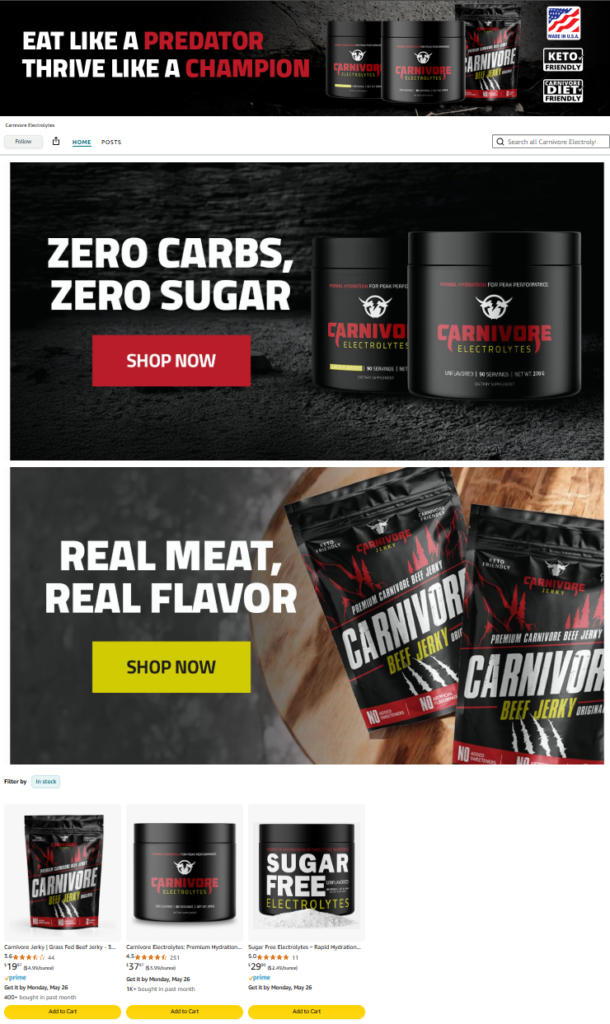
Amazon Brand Storefronts occupy a distinctive space within the marketplace by showcasing your entire brand narrative, product catalog, and unique value proposition, differing significantly from individual product listings. Furthermore, Brand Storefronts require Brand Registry enrollment, which signals credibility and commitment to Amazon’s algorithm. As a result, registered brands receive enhanced visibility opportunities and access to premium features that non-registered sellers cannot access.
Amazon’s algorithm monitors several critical performance indicators that determine your visibility and success:
- Traffic Metrics: Tracks total visits and unique visitors to measure overall reach
- Engagement Signals: Reveals click-through rates, time spent on page, and navigation depth to communicate customer interest levels
- Conversion Data: Carries tremendous weight by tracking add-to-cart rates and purchase behavior, consequently comparing your performance against category benchmarks, storefronts that outperform competitors receive algorithmic rewards
- Content Quality: Evaluates visual appeal, mobile optimization, and storytelling effectiveness
On the other hand, traditional SEO strategies focusing heavily on keyword optimization and backlinks hold limited value within Amazon’s closed ecosystem. Instead, Amazon’s algorithm prioritizes behavioral signals and conversion performance, making visual storytelling and user experience paramount. Moreover, Amazon’s algorithm adjusts in real-time, responding to customer behavior patterns. Therefore, this requires constant monitoring and adaptation rather than a “set and forget” approach, precisely where FBA Creatives excels by keeping your storefront aligned with Amazon’s evolving requirements.
Structural Optimization: Building for the Algorithm

Your storefront’s structural foundation directly impacts algorithm performance and customer engagement. The homepage must immediately communicate your value proposition while efficiently guiding visitors across product categories. Research demonstrates that storefronts with 3-5 well-organized subpages achieve optimal results, providing sufficient depth to showcase variety while maintaining intuitive navigation. Clear navigation labels should incorporate relevant keywords naturally while remaining concise and descriptive, and strategic internal linking keeps customers engaged longer while distributing algorithmic authority across your pages.
Mobile optimization is now non-negotiable for algorithm success, as mobile devices account for over 70% of Amazon traffic. Consider these critical mobile optimization factors:
- Responsive design – Ensure your storefront adapts seamlessly across all screen sizes
- Touch-friendly elements – Buttons and interactive features should measure at least 44×44 pixels to prevent user frustration
- Load time optimization – Fast loading is critical since users frequently browse on cellular connections
- Algorithm evaluation – Amazon specifically assesses mobile performance when determining rankings, making faster load times directly correlate with better algorithm positioning
Content Optimization: What the Algorithm Rewards
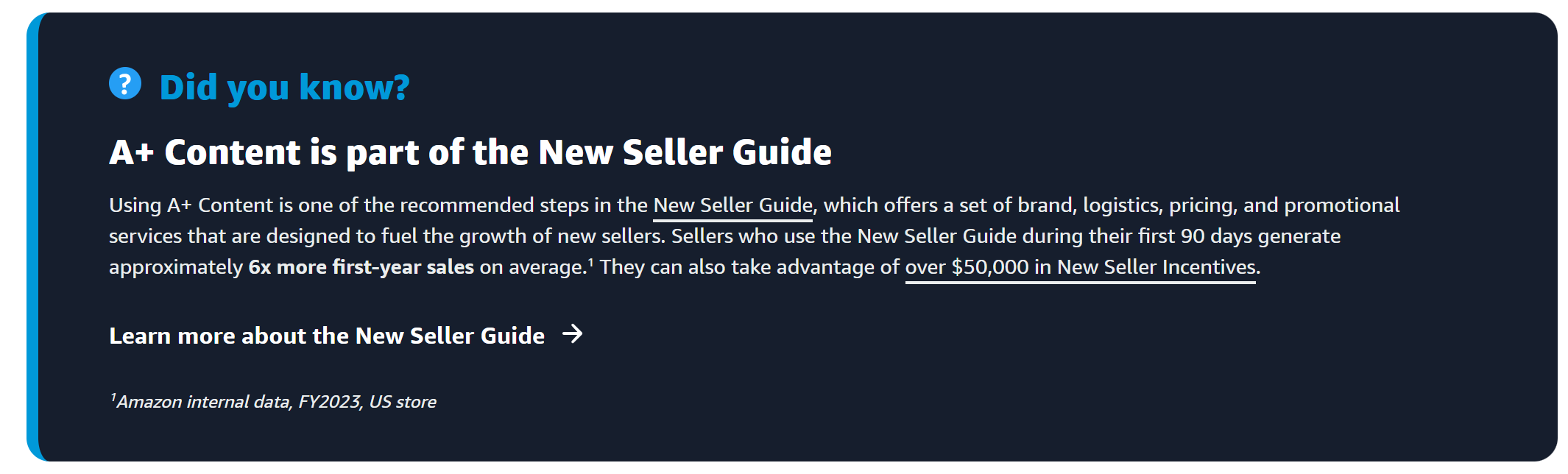
High-resolution imagery forms the cornerstone of successful Amazon Brand Storefronts—exceptional storefronts upload images at 2000+ pixels to ensure crisp display on high-resolution devices while maintaining fast load times through proper compression. Similarly, balancing lifestyle and product-only images maximizes both emotional connection and clarity: lifestyle images demonstrate products in authentic contexts, whereas product-only shots provide the detailed views necessary for purchase confidence. Furthermore, Amazon’s algorithm demonstrates clear preference for video content, consistently ranking storefronts with quality video higher than static-only competitors since video increases time-on-page metrics dramatically.
Strategic content decisions that boost your storefront’s algorithm performance include:
- Video Duration: 30-90 second videos perform best by providing sufficient time to showcase key features while maintaining viewer engagement
- Video Variety: Lifestyle videos, product demonstrations, 360-degree rotations, and infographic animations each serve distinct purposes in your content mix
- A+ Content Synergy: Your A+ Content within listings and Brand Storefront should work together to create cohesive brand experiences, however, avoid simply duplicating content between locations
- Strategic Linking: Connect listings and storefronts to increase overall engagement, benefiting algorithm performance across both areas
- Content Consistency: Reinforces professionalism and trustworthiness throughout the customer journey
- Smart Keyword Placement: Influences discoverability throughout your storefront, but prioritize readability over keyword density, engagement metrics deliver better results than excessive keyword counts
Ultimately, FBA Creatives masters these optimization techniques, ensuring every visual element works synergistically to maximize both customer engagement and algorithm performance.
Traffic Generation Strategies

First, Sponsored Brand campaigns represent the most direct method for driving targeted traffic. These prominent ad placements appear at the top of search results. They feature your logo, custom headline, and multiple products. Similarly, video ads generate exceptional engagement rates. They capture attention through motion and storytelling. In addition, DSP campaigns enable sophisticated targeting based on behaviors and demographics. Consequently, they build brand awareness that translates into increased direct storefront traffic.
Furthermore, external traffic signals exceptional quality to Amazon’s algorithm. It demonstrates genuine brand equity when customers arrive from outside Amazon. As a result, Amazon rewards this external engagement with improved internal visibility. Meanwhile, social media integration strategies transform followers into Amazon customers. Share storefront links in Instagram bios, Pinterest boards, and Facebook content. Additionally, influencer partnerships amplify reach beyond your immediate audience. Moreover, email marketing drives repeat visits from existing customers. Segmented campaigns direct different customer segments to relevant category pages.
In addition, strategic product placement guides customers toward complementary purchases. Position bestsellers prominently on your homepage. Showcase new arrivals to maintain freshness. Similarly, “Shop by Category” optimization helps customers navigate large catalogs efficiently. Use logical categories that match customer thinking patterns. Moreover, related product recommendations increase average order values. Place complementary items strategically throughout your storefront. Furthermore, bundle promotion strategies encourage larger purchases. They simplify decision-making for customers. Therefore, feature curated product bundles prominently to increase transaction sizes.
Measuring and Improving Performance

First, the Store Insights dashboard provides comprehensive analytics. It reveals traffic patterns, customer behavior, and conversion trends. Regular monitoring helps understand both immediate reactions and longer-term trajectories. Additionally, traffic source analysis illuminates which channels drive the most valuable visitors. Meanwhile, sales attributed to your storefront demonstrate direct ROI. Track purchases made by customers who visited within a specific attribution window.
Moreover, testing different elements systematically reveals what resonates most with your audience. Start with high-impact elements like homepage hero images. Test headline copy and primary call-to-action buttons. However, make single changes at a time to isolate variables. Amazon’s constraints limit traditional simultaneous A/B testing. Instead, you can test sequentially. Implement one design for several weeks and measure performance. Then implement an alternative and compare results. Furthermore, seasonal optimization opportunities provide natural testing windows.
In addition, monthly review schedules ensure consistent attention to storefront performance. Dedicate specific times each month to review Store Insights data. Identify underperforming elements before negative trends impact sales. Similarly, quarterly major updates maintain freshness. They demonstrate active brand management to Amazon’s algorithm. Include substantial content refreshes like new hero images and updated photography. Additionally, stay current with Amazon’s guideline changes. This protects your storefront from policy violations. Furthermore, it enables you to leverage new features immediately. Consequently, competitor analysis informs strategic positioning decisions.
Common Mistakes That Hurt Algorithm Performance

Overcrowded layouts overwhelm visitors and dramatically increase bounce rates, causing customers to abandon storefronts rather than process walls of products. Similarly, poor mobile experiences alienate the majority of potential customers through text requiring zooming and buttons too small to tap, consequently signaling low quality to Amazon’s algorithm. Additionally, slow-loading content tests customer patience, studies show each additional second reduces conversions by approximately 7%. Furthermore, inconsistent branding across pages creates confused customers who question your professionalism, while generic stock photos fail to differentiate your brand or create emotional connections.
Common mistakes that sabotage storefront performance include:
- Keyword Stuffing: Creates awkward, unnatural copy that repels customers while fooling no algorithm, Amazon’s sophisticated systems recognize over-optimization and potentially penalize storefronts prioritizing keywords over readability
- Outdated Product Information: Damages credibility and erodes customer trust in your brand
- Missing or Low-Quality Videos: Represents significant missed opportunities since customers increasingly expect video content, causing storefronts lacking video to consistently underperform competitors
- Ignoring Seasonal Updates: Wastes peak shopping opportunities during Prime Day and Black Friday, signaling stagnant brand management
- Neglecting Customer Feedback: Shows disregard for customer preferences, regularly monitor reviews to address recurring themes proactively
- Failing to Leverage New Amazon Features: Leaves competitive advantages unclaimed as the platform regularly rolls out new capabilities
Moreover, not utilizing all available subpages limits your storytelling capacity and reduces engagement opportunities. Consequently, FBA Creatives ensures your storefront avoids these pitfalls through expert design that balances aesthetics, algorithm optimization, and customer experience.
Why Professional Design Makes a Difference
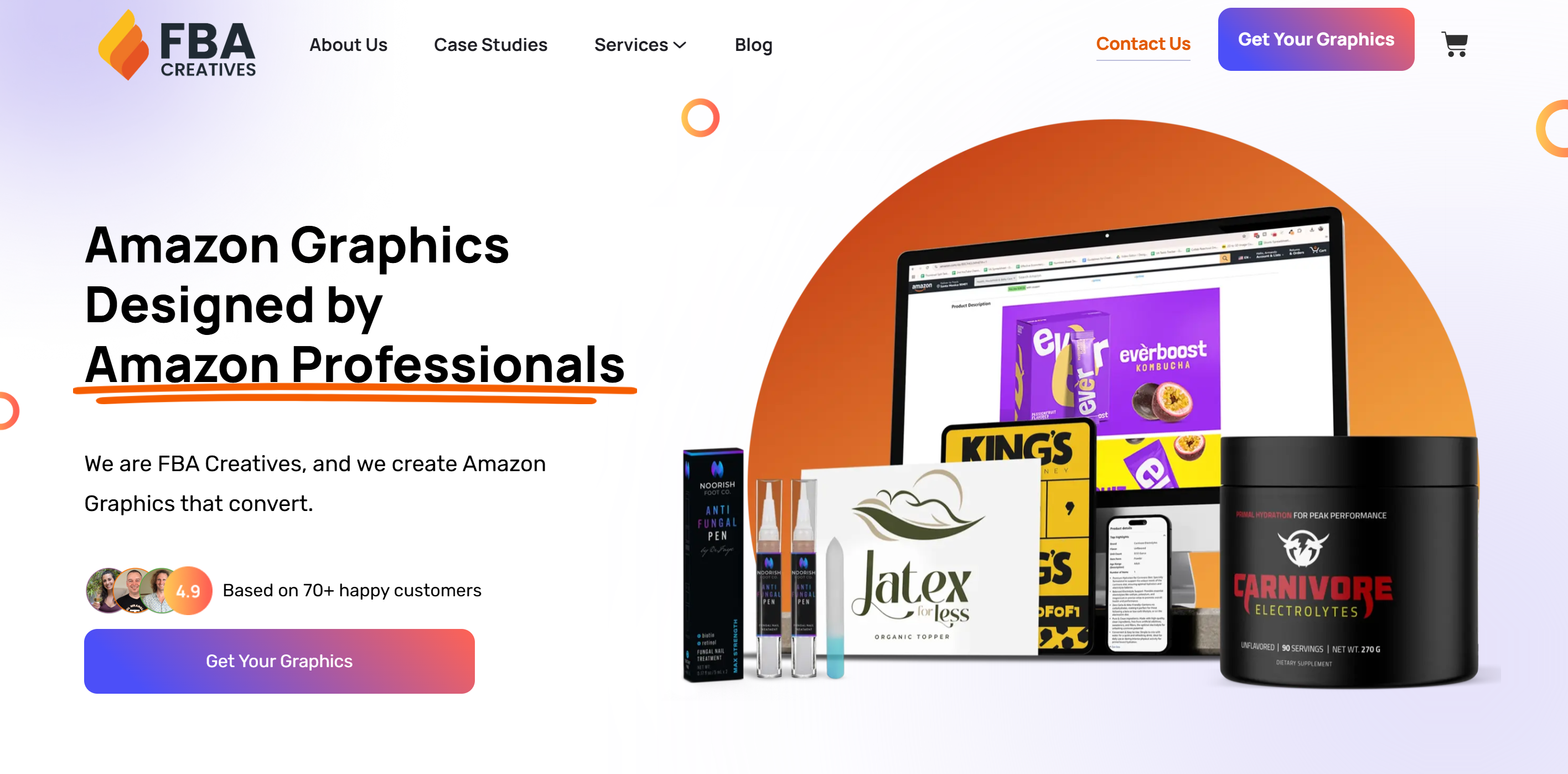
Creating an optimized Amazon storefront requires specialized knowledge that goes far beyond basic design skills, you need deep understanding of Amazon’s ranking factors, platform updates, and technical optimizations that most sellers never consider. Moreover, DIY approaches demand 40-60 hours minimum for experienced sellers, while beginners invest 80+ hours without guaranteed results. Consequently, this represents massive opportunity cost when you could be sourcing products, managing inventory, or growing your business. Fortunately, FBA Creatives eliminates this burden as a full-service Amazon design agency specializing in high-converting, visually compelling content that helps sellers stand out and scale faster.
FBA Creatives delivers every visual element your brand needs, each optimized for maximum algorithm performance:
- Custom Product Images & 3D Renders: Professional visuals that stop scrollers and drive clicks
- Amazon Brand Storefront Design: Flagship service creating immersive shopping experiences aligned with Amazon’s latest guidelines
- A+ Content Creation: Enhanced listings that boost conversion rates and organic rankings
- Product Videos: Lifestyle, infographic, and 360-degree formats that increase engagement
- Packaging Design: Cohesive brand experience extending from digital to physical touchpoints
Additionally, every asset is tailored to your product, niche, and audience while maintaining perfect alignment with Amazon’s ranking systems. Furthermore, with industry-leading competitive pricing, 7-business-day turnaround, unlimited revisions, 24/7 support, and a no-questions-asked money-back guarantee, FBA Creatives removes every traditional barrier to professional storefront optimization. As a result, you receive polished, sophisticated designs that translate directly into higher conversion rates and stronger brand perception.
Getting Started: Your Action Plan

Start by auditing your current storefront using Store Insights traffic metrics and testing mobile experience on actual devices. Identify your three weakest areas, whether it’s slow load times, broken mobile layouts, or missing video content and prioritize mobile optimization since it drives the majority of Amazon traffic. Consider partnering with FBA Creatives when complexity exceeds your capabilities, especially when:
- Launching new brands or preparing for major shopping seasons
- Competing in highly competitive categories requiring visual differentiation
- Needing quick turnaround with their 7-business-day first draft guarantee
Establish a quarterly refresh schedule aligned with seasonal changes and new product launches to signal active brand management to Amazon’s algorithm. FBA Creatives stays ahead of platform updates and implements changes proactively, ensuring your storefront remains optimized while you focus on growing your business. Build lasting brand loyalty by maintaining consistency across your storefront, packaging, product quality, and customer service, creating trust that transforms one-time buyers into lifelong advocates. Success comes from taking decisive action rather than endless planning.
Taking Your Brand Storefront to the Next Level

Amazon’s Brand Storefront represents far more than a digital catalog. It’s your most powerful tool for building brand equity and driving conversions. Moreover, algorithm optimization transforms this tool from a basic necessity into a strategic advantage. It compounds over time, driving visibility and sales simultaneously. This happens through technical performance, content quality, structural design, and strategic traffic generation.
Furthermore, your storefront serves as your digital showroom. It often forms first impressions that determine whether customers explore further. Make it count by implementing the strategies outlined throughout this guide. Maintain commitment to excellence. Additionally, leverage professional expertise when complexity demands specialized help. Take action today by auditing your current storefront. Identify priority improvements. Then decide whether DIY optimization or professional services best suit your situation.
If you’re ready to transform your Amazon presence, reach out to FBA Creatives for a consultation. Your storefront can perform as beautifully as it looks. Moreover, with competitive pricing, unlimited revisions, and a money-back guarantee, you have nothing to lose. The 7-day turnaround provides tremendous competitive advantage. Furthermore, the future of Amazon selling belongs to brands who invest in quality. It belongs to those who understand algorithm optimization. They consistently deliver exceptional customer experiences. Therefore, your storefront represents the perfect place to begin building that future today.
Frequently Asked Questions
How much does it cost to create an Amazon Brand Storefront?
Creating a Brand Storefront on Amazon itself is free for enrolled Brand Registry members. However, the investment lies in professional design and optimization. DIY storefronts cost nothing beyond your time. In contrast, professional services range from $500 to $5,000+ depending on complexity. FBA Creatives offers the most competitive pricing in the industry. Therefore, they make professional optimization accessible for sellers at every level.
How long does it take to see results from storefront optimization?
Initial traffic improvements typically appear within 2-4 weeks. Amazon’s algorithm recognizes enhanced quality signals. Moreover, significant conversion rate improvements often manifest within 30-60 days. Long-term algorithm benefits compound over 3-6 months. However, seasonal factors and category competition significantly influence timelines.
Can I edit my Amazon Brand Storefront after it’s published?
Absolutely. Amazon allows unlimited editing of published storefronts. In fact, regular updates actually benefit algorithm performance. They signal active brand management. Edit your storefront anytime to refresh content or add new products. Additionally, changes typically go live within minutes.
Do I need professional photography for my storefront?
While not technically required, professional photography dramatically impacts conversion rates. High-quality images signal brand legitimacy. Moreover, they reduce bounce rates and increase time-on-page metrics. Smartphone cameras can produce acceptable results with proper lighting. However, professional photography creates polish that amateur shots rarely achieve. Furthermore, FBA Creatives includes custom product photography in storefront packages.
How does my Amazon Brand Storefront affect my product listing rankings?
Your storefront influences product listings through multiple pathways. First, traffic driven from your storefront signals popularity and relevance. Additionally, increased brand awareness drives brand searches that boost organic rankings. Enhanced brand credibility improves conversion rates. Consequently, Amazon’s A9 algorithm rewards this with better placement. Moreover, branded search traffic reduces advertising dependency over time.
What’s the difference between A+ Content and Brand Storefront?
A+ Content appears within individual product listings. It enhances single-product pages with rich media. In contrast, Brand Storefronts provide multi-page brand experiences. They showcase your entire catalog and brand story. Both serve important but distinct functions. Specifically, A+ Content converts customers already viewing specific products. Meanwhile, storefronts build brand awareness and facilitate catalog exploration. Therefore, optimal strategy leverages both.
Can I drive external traffic to my Amazon Brand Storefront?
Yes, and Amazon strongly encourages external traffic generation. Create vanity URLs through Amazon Attribution. These track external traffic sources like social media and email campaigns. Moreover, external traffic signals valuable brand equity to Amazon’s algorithm. Consequently, this often results in improved internal visibility. However, ensure external visitors land on optimized storefronts.
How often should I update my Amazon Brand Storefront?
Minor updates should occur monthly based on performance data. Address underperforming elements or feature new products. In contrast, major refreshes work best on quarterly schedules. Coincide them with seasonal changes or shopping events. Successful sellers maintain balance between consistency and freshness. Therefore, at minimum, update before Prime Day, Black Friday, and holiday seasons.
What happens if my Brand Storefront violates Amazon’s policies?
Policy violations typically result in storefront suppression. Amazon removes your storefront from public visibility temporarily. Moreover, serious or repeated violations can jeopardize Brand Registry status. Amazon usually provides specific violation details. Additionally, they offer opportunities for correction. Prevent violations by staying current with guideline changes. Therefore, partner with knowledgeable agencies like FBA Creatives who ensure compliance.
Is an Amazon Brand Storefront worth it for small sellers?
Absolutely. Brand Storefronts benefit sellers at every scale. They provide free, prime digital real estate. Moreover, small sellers particularly benefit from the credibility boost. Professional storefronts help compete against larger competitors. Additionally, storefronts reduce advertising costs over time. Therefore, the minimal investment required delivers exceptional ROI regardless of business size.